Wind-Ready Cabana Structures for Commercial Outdoor Spaces
If you’re designing an outdoor area for a coastal property, elevated lot, waterfront location, or another space prone to frequent wind, selecting wind-ready cabana structures for commercial outdoor spaces is essential. Cabanas are a popular choice for hospitality properties, resorts, waterparks, country clubs, and other commercial settings. They provide comfort, shade, privacy, and luxury for guests spending time outdoors. However, not all cabana structures are built to handle demanding weather conditions.
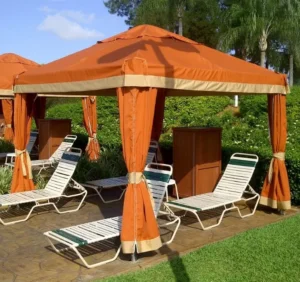
It’s important to choose a cabana that not only looks great but also provides many years of dependable durability, safety, and value. Many customers consider only how a structure will look when deciding which outdoor building to select. However, if your property is located in a windy area, there are several other important factors to consider.
From engineering and materials to anchoring methods and overall structural design, American Holtzkraft has helped numerous properties select cabana designs suited for windy locations.
Why Are Wind Loads Such an Important Consideration for Cabanas?
Wind creates significant force against outdoor structures. Cabanas often have open sides, decorative accents, fabric elements, and roof styles that can be more susceptible to uplift and wind pressure.
Wind can flow around a structure and create forces that may:
- Lift roof systems
- Stress support posts
- Loosen connections
- Damage decorative features
- Weaken structural stability
- Create maintenance issues
If your cabana isn’t designed to withstand local wind loads, it may suffer accelerated wear or experience structural damage during severe weather events. This can create serious concerns for hospitality businesses that rely on outdoor facilities to keep guests safe and comfortable.
What Structural Features Help Cabanas Resist Wind?
Strong structural design is the foundation of every wind-resistant cabana. However, several details play a key role in overall performance.
Heavy-Duty Support Posts
Large support posts provide greater structural stability, allowing the cabana to stand up against side-to-side wind forces. Many commercial-grade cabanas use industrial-strength posts that are heavier and more durable than those commonly found in residential structures.
Reinforced Connections
Connection points are often where structural failures begin. Quality cabanas are constructed using reinforced hardware, engineered brackets, and high-quality fastening materials. This allows wind forces to be distributed more effectively across the structure.
Proper Roof Engineering
The roof system on a cabana greatly impacts its ability to withstand wind. Poorly constructed roofs can contribute to uplift and place stress on the entire structure. By using engineered roofing materials and thoughtful design, wind-resistant cabanas can reduce pressure while maintaining their aesthetic appeal.
American Holtzkraft understands that durability matters when designing commercial outdoor structures. Our cabanas are engineered to meet the demands of challenging hospitality environments.
Which Roofing Styles Perform Best in Windy Locations?
A cabana’s roof style can greatly affect how well it performs in windy conditions. Some designs perform better than others.
Hip Roof Designs
Cabanas with hip roofs can provide strong wind performance because every side slopes downward. The slopes allow wind to flow over the structure rather than pushing directly against large vertical surfaces.
Sloped Roof Systems
Roofs that are slightly angled can also help improve wind resistance. A sloped roof allows wind to flow around the structure with less pressure buildup.
Built-In Architectural Roofs
Many commercial cabanas use integrated architectural roof systems. These roofs are engineered to meet the specific performance requirements of hospitality businesses and recreational properties.
Certain regions have specific weather patterns that must be considered when designing an outdoor structure. Local building codes should also be followed to help ensure your cabana is adequately prepared for regional wind loads.
Why Do Materials Matter So Much in Windy Environments?
The materials used to construct a cabana directly affect its strength and lifespan. High-quality, wind-resistant structures should use materials designed to withstand significant stress.
Common commercial-grade materials include:
- Powder-coated aluminum
- Heavy-gauge steel components
- Engineered hardwoods
- High-performance composites
- Weather-resistant roofing materials
These materials can provide greater resistance to corrosion, warping, cracking, and structural fatigue.
Commercial properties located along coastlines have additional factors to consider when selecting outdoor structures. Salt air, humidity, and severe weather can take a serious toll on outdoor spaces. By choosing cabana designs made with durable materials, you can help lower maintenance requirements while increasing the lifespan of your structures.
American Holtzkraft uses high-quality materials when constructing commercial outdoor structures. We combine those materials with precision craftsmanship to create cabanas built for long-term use.
Wind-Ready Cabana Structures for Commercial Outdoor Spaces
When selecting wind-ready cabana structures for commercial outdoor spaces, property owners should consider structural engineering, construction materials, roof design, anchoring methods, local building requirements, and long-term maintenance. Every outdoor structure will look slightly different based on the property’s needs and specific design choices.
Contact American Holtzkraft today at (570) 539-8945 or email customerservice@holtzkraft.com to learn more about creating a custom cabana for your property.